
Here are thoughts about our mission is to enable media teams to boost advertising effectiveness through smarter technology for media planning and media buying.

The Hourglass Funnel Changes Everything
Lately, I’ve been thinking a lot about the hourglass funnel. Most funnels stop at the thin bottom, when a customer “drops” out, having made the journey through awareness, interest, desire and action. After the “action,” or purchase, the customer gets put into a CRM to be included in more traditional marketing outreach efforts, such as calls, e-mails, and catalogue mailings. In the past, marketers often thought about how to turn customers into advocates, but couldn’t figure out how to do it at scale. Companies that were really good at multi-level marketing, like Amway, didn’t have easy-to-replicate business models. Today, the situation has changed. Social-media platforms give marketers tools to engage customers in their CRMs and bring them back through the bottom of the funnel, turning them into brand advocates — and maybe even salespeople. This is why Salesforce has been snatching up social-media companies like Radian6 and Buddy Media, while Oracle bought Vitrue and Involver. These platforms can help get people talking about your [...]
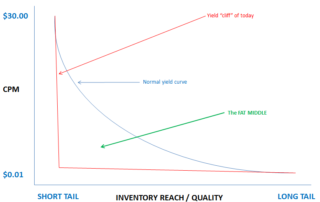
The Fat Middle
I recently sat through some great presentations on “programmatic direct” media buying at the recent Tech for Direct event in New York. With almost 70% of digital display dollars flowing through the negotiated (RFP) market, everyone wants to be in the game.

A Contrarian View of Programmatic RTB
I’ve always loved the notion of programmatic RTB. As a data hound and an early adopter of Appnexus , the notion that advertisers can achieve highly granular levels of targeting and utilize algorithms to impact performance is right in my wheelhouse. Today’s ad tech, replete with 300 companies that enable data-driven audience segmentation, targeting, and analytics is testament to the efficiency of buying ads one impression at a time. But what if driving efficiency in display actually does more harm than good? Today’s RTB practitioners have become extremely relentless in pursuit of the perfect audience. It starts with retargeting, which uses first party data to serve ads only to people who are already deeply within the customer funnel. No waste there. The next tactic is to target behavioral “intenders” who, according to their cookies, have done everything BUT purchase something. Guess what? If I have searched 4 times in the last three hours for a flight from JFK to SFO, [...]

Complexity is the Digital Ad Agency’s Best Friend
I once heard Terence Kawaja remark that “complexity is the agency’s best friend.” It’s hard to argue with that. Early digital agencies were necessary because doing things like running e-mail campaigns, building websites, and buying banner ads were really complicated. You needed nerdy guys who knew how to write HTML and understood what “Atlas” did. Companies like Operative grew admirable services businesses that took advantage of the fact that trafficking banner ads really sucked, and large publishers couldn’t be bothered to build those capabilities internally. The early days were great times for digital agencies. They were solving real problems. Fast forward 13 years. Digital agencies are still thriving, mostly by unpacking other types of complexity. “Social media experts” were created to consult marketers on the new social marketing channel, “trading desks” launched to leverage the explosion of incomprehensible RTB systems, and terms like “paid, owned, and earned” were coined to complexify digital options. It’s hard being a marketer. So much [...]

Stealing Some of Microsoft’s Ad Tech Market Share
When you think of advertising technology in the display space, the first names you’re likely to think of are Google, PubMatic, Adobe, and AppNexus. But Microsoft? Not really top of mind, unless you are thinking of its disastrous aQuantive acquisition in 2007. Sure, every now and then MSFT will pick up the odd Rapt or Yammer, but is it really having a huge impact in the ad tech space? Even if you’re a regular AdExchanger reader, you’d be justified in thinking it’s not. But you’d be 100% wrong. Microsoft has been quietly running the inner ad-technology workings of digital display since the first banner ad was purchased in 1995. According to some recent research, the company’s ad-planning software boasts an amazing 76% market share among agency media planners. MediaVisor ranks a distant second with a measly 9.7 Almost nine in 10 planners who use Excel spend more than an hour a day using its software, while almost 35% use it for more than four hours per day. That [...]

The Elephant in the Room: Agency Compensation
Earlier this month, during the Agency-Only Day at the iMedia Agency Summit, I gave a presentation on agency automation and streamlining the media planning process. It’s a complicated and expensive process still done manually at most agencies.
The Happiness Gap
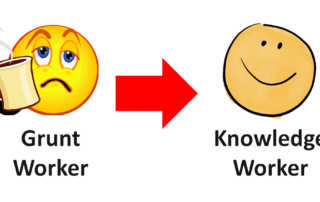
Today, I presented “The Happiness Gap” at Upstream Group’s Seller Forum. What a great way to spend the day! I highly recommend the Seller Forum for anyone in a senior position in digital ad sales. Doug Weaver is a fountain of knowledge. But this is no “sage on the stage” event. It’s a true forum where much of the value comes from talking with other attendees. Everyone there was top notch and willing to share both successes and failures. During the day, I was able to validate ideas and came away with at least 5 new ideas. Best of all: I met a bunch of smart, new friends! Here’s the quick summary of The Happiness Gap for digital publishers: (1) More than half of your employees plan to leave in the next two years (2) They are leaving because they are unhappy (no surprise, right?) (3) The best way to retain them / make them happy is to provide training and a career [...]

Let’s End the Human Trafficking in Digital Media
In the envisioned world of “programmatic direct,” computers buy all digital media automatically with astonishing efficiency and without human intervention. Contrast that with today’s reality: an army of DSOs – Digital Switchboard Operators – carrying out digital media plans using a manual 42-step process. On the buy side, this process typically requires 482 hours in media agency labor per campaign. On the sell side, anecdotal evidence indicates even more time is spent among the publishers. One of the most time consuming, error prone, and soul crushing parts of the process is ad trafficking. Trafficking is the sub-process of setting up ad servers for a given campaign. Those not familiar with the digital media “sausage factory” might think this process is entirely automated and done with the click of a button. Nothing could be further from the truth. With directly sold ads, trafficking is done manually by humans employing a great deal of effort. Here’s how it works today. The trafficking [...]

One Obvious Way to Save Publishing
The publishing business is under siege by technology. The New York Times is blaming exchange-traded media for its most recent declines in online display ad revenue. Federated Media just gave up on direct sales in favor of exchange-traded media. Meanwhile, CNET just reported that “Google generated $20.8 billion in ad revenue in the first six months of 2012, while the whole U.S. print media industry — newspapers and magazines — made only $19.2 billion.” The trend is clear: publishers are losing and the advertising technology intermediaries are winning. Does this really have to be a win/lose situation? A key topic at publishers’ board meetings must be, “How do we wrestle back control and get the revenue and income we deserve?” Here’s an obvious idea: make it easier for people to buy advertising from you. Today’s process to buy a digital advertisement directly is a mess. It’s a manual 42-step process taking an average of 48 hours per insertion order and costing buyers more than $4k [...]

Are Publisher Trading Desks Next?
A long time ago, I was selling highly premium banner ad inventory to major advertisers. Part of a larger media organization, our site had great consumer electronics content tailored to successful professional and amateur product enthusiasts. The thing we loved most was sponsorships and advertorials. We practically had a micro-agency inside our shop, and we produced amazing custom websites, contests, and branded content sections for our best clients. They loved our creative approach, subject matter expertise, and association with our amazing brand. They still capture this revenue today. The next thing we loved was our homepage and index page banner inventory. We sold all of our premium inventory—mostly 728×90 and 300×250 banners—by hand, and realized very nice CPMs. Back then, we were getting CPMs upwards of $50, since we had an audience of high-spending B2B readers. I imagine that today, the same site is running lots of premium video and rich media, and getting CPMs in the high teens for [...]